Mawu: The Fon Creator and Moon Goddess
A rainbow serpent carried the creator across the dark in its mouth, back before there was any ground to stand on.
Everywhere the serpent turned, the world took shape behind it. Where it wound, rivers ran. Where it rested, mountains rose. The one it carried was Mawu, the moon, mother of the Fon gods, and when she had made enough she told the serpent to coil beneath the world and hold it up. He is holding it still.
Her people call her the cool half of creation. Her twin is the heat. This is the story of how the two of them divided the sky.
Overview of Mawu
Mawu is the supreme creator of the Fon people of the old kingdom of Dahomey, in what is now Benin. A note up front, since this site shelves the West African goddesses together under the Yoruba label: Mawu is Fon. The Yoruba, her neighbors to the east, have their own gods, the orishas. The Fon call theirs vodun, and the word that crossed the Atlantic and became Vodou began here. The Ewe of Togo and Ghana, close cousins of the Fon, use Mawu as their everyday word for God to this day.
She is the moon and the night, the west, coolness, motherhood, forgiveness, and wisdom. Her twin Lisa is the sun and the day, the east, heat, strength, and work. Together they are Mawu-Lisa, a single creator with two faces, one turned to the dark and one to the light. Some Fon tell it as twins, some as husband and wife, and some make Mawu the elder and Lisa her son or consort. Every version agrees on the division of labor. She rules the night sky, he rules the day, and the world lives in the balance between them.
Both are children of Nana Buluku, the primordial creator, who made the raw universe, gave birth to the pair, and withdrew. Mawu-Lisa took over the work of giving it shape. Their children became the great vodun who run the world day to day: the earth, the thunder, the sea, iron, the hunt, and the messenger who carries every prayer between heaven and earth.
The name is thought to come from an Ewe root, wu, to stretch over or overshadow. The one who covers everything.
Titles
- Mawu, “the one who stretches over all”
- Mawu-Lisa, the twin creator
- Dada Sɛgbo, “the Great Sɛ,” the great life-force, a name the creator carries in Fon tellings
- Mother of the vodun
- The Moon, the Night, the West
Characteristics
How Mawu tends to be shown:
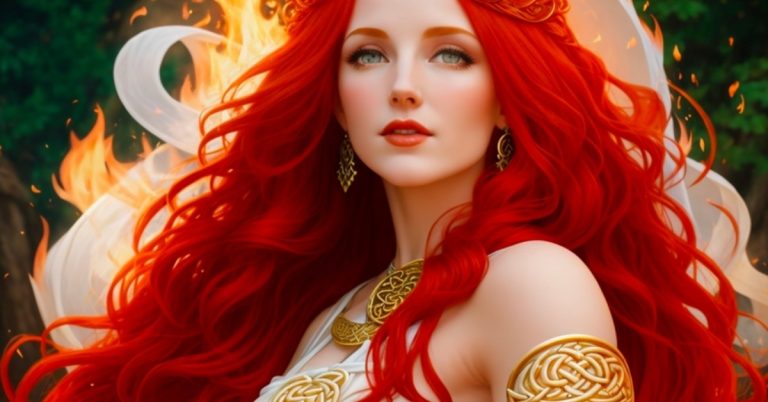
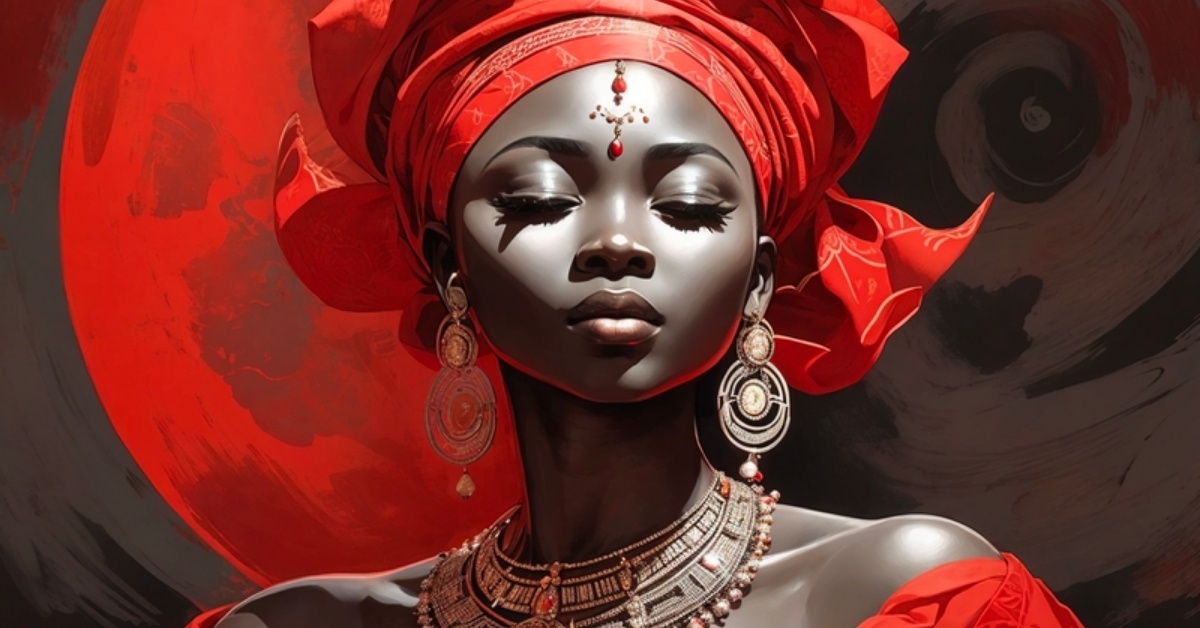
- An elder woman, full-figured, often painted red in Fon shrine art
- Paired with a younger man, Lisa, the two sometimes carved as one body with two faces
- Holding the moon, or gazing at it
- With the rainbow serpent Aido-Hwedo coiled beside her, or worn as her necklace
- Calm and remote; she is the cool one
Abilities
- Creation — she shaped the world and formed the first people from clay
- Mother of gods — she bore the vodun who govern earth, sea, thunder, iron, and the hunt
- Souls and destiny — Fon tradition has her make the soul, the sɛ, and set each person’s fate
- Judgment — after death she weighs a life and metes out its reward or punishment
- Life and death — she gave the world life, and when the world needed it, she gave death too
Symbols
- The moon — her body in the sky, the guiding light of the night
- Clay — what she made people from
- The rainbow serpent — Aido-Hwedo, who carried her and now holds up the earth
- The calabash — the Fon picture the universe as a gourd shut in two halves, with the flat earth at the seam; Mawu-Lisa hold the whole thing closed
- The west — her direction, where the sun goes down and her night begins
Traits
- Cool where Lisa is hot; she is the rest after the work
- Forgiving, and inclined to mercy
- A mother first: everyone alive is her child
- Wise, and firm about being obeyed. A certain monkey learned that
- Distant; she finished the work and stepped back, leaving the vodun to run things
Festivals and Rituals
Mawu-Lisa sit at the top of the Fon pantheon and receive the least direct worship in it. That sounds backward until you see how Fon religion works. The high creator is far away; the vodun are near. Drumming, offerings, possession, and prayer go to the children, to Sakpata, Hevioso, Gu, and the rest, and through them the creator is honored.
The pair does have a home. In the 1740s the priestess Hwanjile, reign-mate to King Tegbesu of Dahomey, built their shrine outside the royal palace at Abomey and served as their high priest. Her successors still carry her name and her office, and the cult has centered on Abomey ever since.
Among the Ewe, Mawu is the name people swear by. N’ta Mawu: I swear to God. The moon keeps her calendar, and its phases mark her.
Legends associated with Mawu
The Fon creation story reached the page in the 1930s, when anthropologists sat with priests and elders in Abomey and wrote down what they were told. It is one of the great origin myths of West Africa: a serpent, four days of work, seven children who divided the world, a monkey with ideas, and the morning death arrived.
The serpent and the four days
In the beginning there was Nana Buluku, who made the raw stuff of the universe, gave birth to Mawu and Lisa, and then retired. Everything that followed was their job.
Mawu went to work with a helper. Aido-Hwedo, the rainbow serpent, existed before the earth did, and he carried the creator in his mouth as she traveled the formless world making things. His body did half the work. Where the serpent’s coils pressed and turned, the land took their shape: the winding riverbeds, the humped hills, the valleys between. His droppings piled up behind him and hardened into mountains, which is why, the Fon say, mountains are full of metal and precious stone. He carried her through the sky as well, and the curve of him is still up there after rain.
The Fon told it as four days of labor. On the first, Mawu-Lisa made the world and everything on it, and shaped the first people from clay. On the second, they made the earth fit to live on. On the third, they gave people sight, speech, and understanding. On the fourth, they gave them the skills to survive: fire, tools, the crafts.
Then Mawu looked at what she had made and worried. The world was heavy. Mountains, forests, animals, people, and all that metal in the hills. Left alone it would sink. So she called the serpent back and asked him to coil himself beneath the earth and hold it up, and he did. Because he hates heat, she made the sea for him to lie in, cool and dark. There he stays, curled in a ring with his tail in his mouth, the world resting on his back. When the weight makes him shift, the earth shakes. That is what an earthquake is.
Seven children and the sharing of the world
Mawu-Lisa had seven children, and the children became the vodun who run the world.
To the first-born, Sakpata, she gave the earth and everything on it, including sickness. To Sogbo, called Hevioso, she gave the sky, thunder, and lightning. Agbe took the sea. Gu took iron, and with it war, tools, and every trade that shapes metal. Age got the wild bush and the animals in it, the hunter’s domain. Djo took the air, the space between earth and sky. Each child received a language to rule in, and each forgot the language of the parents.
That left Legba, the youngest. There was nothing left to give him. So Mawu made him the linguist. Legba alone kept every language, the parents’ and all six of his siblings’, and became the go-between. Every prayer to any vodun passes through him. Every message from the creator comes down through him. Small, last, landless, and the only one who can talk to everybody. The Fon understood something about power when they told that.
Awe and the seed of death
Here is the story that shows Mawu’s harder edge, and it starts with a helper who got ambitious.
When Mawu was making the animals, she gave a monkey named Awe some of the work: shape a few creatures from clay, the way she did. Awe did, and it went to his head. He told the other animals that he could make life the same as Mawu, and that there was no real difference between them. The animals began to listen. Some wondered why they were bowing to Mawu at all when Awe could do the same trick.
Word reached the sky. Mawu sent for the monkey.
Awe climbed up to the heavens to prove his point. He shaped a figure and commanded it to breathe. It lay there. He tried again. Clay, and nothing more. Mawu let him try until the lesson was plain, and then she did one more thing. She set a bowl of porridge in front of him, and in the porridge she had placed the seed of death.
Awe ate. And from that day death was in the world.
It is a hard story, and the Fon meant it to be. The monkey’s crime was one claim: that making and giving life were the same thing, and that any clever hand could do what the mother of everything does. Mawu answered by showing what else she holds. She gives life, and she can take it, and she is the only one who can do either.
Lisa clears the forest
A quieter story shows how the twins work together.
When the world was finished, Mawu withdrew to the heavens to rest, the way her own mother had. For a while she left people to themselves. Then she looked down and saw that things had gone badly. The forest had closed over everything. People were lost in it, hungry, and fighting each other.
She sent Lisa. He came down carrying the tools Gu had taught people to make, cleared the forest so there was room to live and plant, and brought the daylight in behind him. He taught them to work the land. Then he went back up, and the sun has been his daily reminder ever since.
That is the pattern of the pair. Mawu makes and rests. Lisa acts and burns. The night is for her, the day for him, and people are supposed to need both.
The serpent’s iron and the end of the world
The Fon also told how it all ends, and the serpent is at the center of that too.
Holding up the world is hungry work. Under the sea, red monkeys forge bars of iron and feed them to Aido-Hwedo so he has the strength to bear the weight. The supply is finite. When the last bar is eaten and the monkeys have nothing more to give, the serpent will turn on his own tail and begin to eat himself. The world, heavy by then with all the people who have ever lived on it, will tip off his back and slide into the sea.
Nobody says when. The monkeys are still forging.
An older Mawu?
The Fon creator has a documented arrival date, and it is 1740.
That is the year an Aja woman named Hwanjile, a captive or a trader from a village west of Abomey, helped a prince named Tegbesu take the throne of Dahomey over his older brother. He made her his kpojito, the “Mother of the Leopard,” the reign-mate who shared his power. She used that power to reorganize the kingdom’s religion, and the centerpiece of the reorganization was Mawu and Lisa. Hwanjile brought their worship from Aja country, set up their shrine outside the palace, made herself their high priest, and ranked them above every vodun in Dahomey. Historians of the kingdom, Edna Bay above all, read the whole thing as statecraft: a king with a shaky claim, a foreign priestess, and a new pair of gods at the top who answered to her. The names were known in Dahomey before 1740. Their place at the head of the pantheon was Hwanjile’s doing.
That leaves the question of what Mawu was before Abomey adopted her, and scholars hold several positions.
One reading, going back to Paul Mercier and Melville Herskovits, the anthropologists who recorded the Fon myths, takes the pair as the ancient form: a single androgynous creator, two-faced, neither half complete alone, with Mawu the elder and the name most often used for the whole. A second reading points to the Ewe, whose Mawu stands alone. Among the Ewe there is no Lisa, and Mawu is simply the high God, the one who stretches over all, which suggests a single supreme deity whose Fon cousin later gained a solar twin. A complication runs through that reading, though. Christian missionaries had been using “Mawu” as their word for God since Capuchin friars arrived on the coast in the 1650s, and by the nineteenth century the solo Mawu was the standard translation of the Christian one. Some of what looks like an older single Mawu may be a newer one. A third proposal reaches east and calls the pair Yoruba borrowings, Mawu from an orisha called Yeye Mowo and Lisa from Obatala, carried west when Dahomey expanded into Yoruba country. The evidence for that is thin and contested.
Behind all three sits the figure everyone agrees on. Nana Buluku, the mother who made the raw universe and then handed it to her children, is older than the debate. She is known to the Fon, the Ewe, and their neighbors, and the Fon myth is careful to say that Mawu-Lisa did the shaping while Nana Buluku did the first making. Whatever Mawu was before 1740, she was already someone’s daughter.
Then the story crosses the ocean. Dahomey was a slaving kingdom, and its wars sent Fon and Aja captives by the tens of thousands to the French colony of Saint-Domingue, now Haiti. The religion went with them and became Vodou. The Rada rite, the oldest and coolest of Vodou’s spirit families, takes its name from Allada, the Aja city the Dahomean kings claimed as their origin. Mawu’s serpent kept his name. He is Damballa now, the great white snake of the Rada rite, and the rainbow half of him became his wife, Ayida-Weddo; the two are drawn as intertwined serpents on Vodou temple walls. Nana Buluku became Nanan-bouclou in Haiti and Nanã in Brazilian Candomblé, an old woman older than creation. Vodou’s own supreme creator, Bondye, sits far above the spirits and is reached through them, the same shape the Fon gave Mawu-Lisa.
The name Mawu itself is faint in Haiti. Some scholars, Bay among them, argue her real legacy there is structural: the cool-and-hot division of the spirits, the remote creator honored through her children, and the women who hold priestly authority in a religion that came from a kingdom where a priestess once set the gods in order. Read that way, Mawu did survive the crossing. She just stopped needing to be named.
Mawu across cultures
A moon goddess paired with a sun god is common enough that Mawu’s version stands out for its politeness. The two share the sky as equals, and the Fon rank them that way.
Compare the neighbors. The Yoruba give the sea to a mother too: Yemaja, mother of the orishas, whose children populate the pantheon the way Mawu’s vodun do, and Olokun, who keeps the deep the way Agbe keeps it for the Fon. The Yoruba river goddess Oshun carries the same cool, sweet, fertile charge the Fon give to Mawu’s night. Across the Gulf of Guinea the same instincts show up under different names, which is what you would expect from peoples who traded, fought, and married across a border for centuries.
Farther afield the pairing flips. Japan puts the woman in the sun, Amaterasu, and her brother Tsukuyomi in the moon, and the two refuse to share the sky at all. Egypt made the sun a man, Ra, and let the sky itself be a woman, Nut, who swallowed him each night and bore him each morning. The Inca married the pair, Inti and Mama Killa, and made their king the sun’s son. Every culture that watches the sky ends up with two lights and a story about how they get along. The Fon answer is one body with two faces, and that is rarer than it sounds.
Final thoughts
Half of creation is rest, and the Fon gave that half to a woman.
Mawu made the world, handed it to her children, and stepped back. She keeps the night, the moon, the cool hours, and the decision about who lives and who dies. Her twin gets the daylight and the labor. They hold equal rank, and the world sits on a serpent’s back between them, held up by patience and iron. Which half of that pair do you think your own culture forgot to honor?
Bibliography
- Bay, Edna G. Wives of the Leopard: Gender, Politics, and Culture in the Kingdom of Dahomey. University of Virginia Press, 1998.
- Bay, Edna G. “Belief, Legitimacy and the Kpojito: An Institutional History of the ‘Queen Mother’ in Precolonial Dahomey.” Journal of African History 36, no. 1 (1995).
- Herskovits, Melville J. Dahomey: An Ancient West African Kingdom. 2 vols. J. J. Augustin, 1938.
- Herskovits, Melville J., and Frances S. Herskovits. Dahomean Narrative: A Cross-Cultural Analysis. Northwestern University Press, 1958.
- Mercier, Paul. “The Fon of Dahomey.” In African Worlds: Studies in the Cosmological Ideas and Social Values of African Peoples, ed. Daryll Forde. Oxford University Press, 1954.
- “Mawu-Lisa”. Encyclopaedia Britannica.
- “Mawu-Lisa”. Encyclopedia of Religion, via Encyclopedia.com.
- “Mawu-Lisa”. Mythopedia.
- Lynch, Patricia Ann, and Jeremy Roberts. “Mawu-Lisa”, “Aido-Hwedo, the Cosmic Serpent”, and “Mawu and the Earth That Became Unwieldy”. African Mythology A to Z, via Oxford Reference.
- “Vodou”. Encyclopaedia Britannica.
- “Mawu”, “Nana Buluku”, “Aido Hwedo”, “Hwanjile”, and “Haitian Vodou”. Wikipedia.