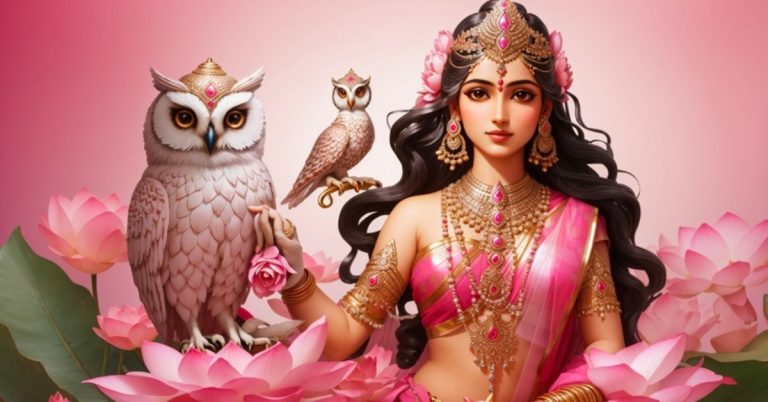
Juno: Roman Queen of the Gods
The dogs slept. The sentries slept. Rome had been under siege for months, and a starving city had eaten nearly everything with a pulse. The one thing left uneaten was the geese, because the geese belonged to Juno.
So when the Gauls came up the cliff in the dark, it was her birds that screamed.
That’s Juno in one night: the queen who stays awake. Wife of Jupiter, keeper of marriages, midwife to Rome, and the goddess whose temple gave us the word “money.”
Overview of Juno
Juno is the queen of the Roman gods, daughter of Saturn and Ops, and both sister and wife to Jupiter, king of heaven. Her sisters are Ceres, who rules the grain, and Vesta, who keeps the hearth. On the Capitoline Hill she shared Rome’s greatest temple with Jupiter and Minerva, the three of them together forming the Capitoline Triad that stood for the Roman state itself.
The Greeks would tell you she is Hera, and the Romans eventually agreed, borrowing Hera’s stories wholesale. But Juno was Italian before she was Greek. Her name comes from the same root as iuvenis, “young,” and carries the sense of vital force in its prime. Rome gave her more titles than any other goddess, and nearly every Latin and Etruscan town had its own Juno, each with a different job.
Her sphere is women, from wedding to childbed, and the state that depends on them. She kept the calendar too. Every month opened with the Kalends, and the Kalends belonged to Juno.
Titles
- Juno Regina (“the Queen”)
- Juno Lucina (“she who brings to light,” goddess of childbirth)
- Juno Moneta (“the Warner,” whose temple became the Roman mint)
- Juno Sospita (“the Savior,” the armed Juno of Lanuvium)
- Juno Caprotina (Juno of the wild fig tree)
- Juno Curitis (“of the spear”)
- Juno Covella (Juno of the Kalends and the new moon)
Characteristics
How Juno tends to be shown in art:
- A tall, matronly figure with a stern, level face
- Crowned with a diadem, often veiled
- Holding a scepter in one hand and a shallow offering dish, the patera, in the other
- Attended by a peacock
- As Sospita, a warrior: a goatskin over her head with the horns still on, a spear raised, a shield on her arm, and shoes with upturned toes
Abilities
- Sovereignty — she is the queen, and the fortunes of the state ride on her favor
- Marriage and childbirth — every wedding and every safe delivery in Rome was her business
- Warning — as Moneta she alerts the city to danger, by goose if necessary
- War — as Sospita and Curitis she is armed, and she fights
- Timekeeping — as Covella she opens every month
- Grudges — she can hound a hero across the sea for years, as Aeneas found out
Symbols
- The peacock — her bird, its tail set with the hundred eyes of Argus
- The goose — her watchbird, the one that saved the Capitol
- The cow — inherited from “ox-eyed” Hera
- The pomegranate — fertility and the married state
- The diadem and scepter — her queenship
- The goatskin — the war-dress of Juno Sospita
- The wild fig tree — sacred to Juno Caprotina
Traits
- Regal, and never lets anyone forget it
- Vigilant, the goddess who notices
- Fiercely loyal to her chosen cities: Argos, Carthage, Rome
- Implacable once wronged, and slow to forgive
- Protective of wives, and merciless toward the women her husband chases
- Shrewd, a strategist who works through winds, Furies, and bargains
Festivals and Rituals
Juno’s year began twelve times over. On the Kalends, the first day of every month, a minor priest called on her as Covella and announced how many days remained until the Nones, and the wife of the king of sacred rites offered her a sow or a lamb in the Regia.
Her great women’s festival was the Matronalia on March 1, the anniversary of her temple as Juno Lucina on the Esquiline, dedicated in 375 BC. Married women went to the temple with their hair loose and nothing knotted on them, so that nothing would bind the births they prayed for. Husbands gave their wives gifts, and the women, for one day, cooked for their own slaves.
February 1 was the birthday of Juno Sospita, whose Roman temple stood in the vegetable market and whose real home was Lanuvium, where the consuls went every year to sacrifice. Ovid also puts her behind the Lupercalia on February 15. When the Sabine wives could not conceive, they went to Juno’s grove on the Esquiline, and the trees told them to let the sacred goat pierce the Italian mothers. An augur read it kindly. The wives were struck with goatskin thongs, and the babies came.
June 1 was Juno Moneta’s day. July 7, the Nonae Caprotinae, was the day the slave women of Rome feasted under fig-tree boughs and ran out the gate shouting men’s names. September 1 belonged to Juno Regina in her Aventine temple, and September 13 to the Capitoline temple she shared with Jupiter and Minerva, when the three gods were served a banquet on couches.
And the month of June, in one telling, is simply hers. In Ovid’s Fasti she appears to the poet in person to say so.
Legends associated with Juno
Juno’s stories are about power, and about what a queen does when it is taken from her: she waits, she watches, and she collects.
The queen who would not forgive
Virgil opens the Aeneid with Juno’s anger, and he lists the reasons.
She loved Carthage above every city on earth, and she had heard that a race of Trojan blood was fated to tear it down. She remembered the judgment of Paris, “the injury to her scorned beauty.” She remembered Ganymede, the Trojan boy Jupiter had carried off to be his cupbearer. And here was Aeneas, the last of the Trojans, sailing for Italy with the gods’ permission.
“I, who walk about as queen of the gods, wife and sister of Jove, wage war on a whole race,” she says. Then she goes to Aeolus, keeper of the winds, and offers him the loveliest of her fourteen nymphs, Deiopea, as a wife, if he’ll wreck the Trojan fleet. He does. The storm scatters the ships across the sea and washes Aeneas up on the coast of Africa, at Carthage, where Juno’s next plan is waiting: Dido, the city’s queen, whom she means to make him love so he’ll stay forever.
That fails too, because fate is fate. So Juno gets worse. In Italy she summons the Fury Allecto out of the underworld to poison the peace between the Trojans and the Latins, and war breaks out over a wounded stag. When Turnus, the Latin champion, tries to burn the Trojan ships, they slip their cables, dive like dolphins, and come up as sea nymphs, because the pines they were built from had belonged to Cybele, the Great Mother, and she’d asked Jupiter to spare them. Even that gift cuts both ways. The Trojans are now stranded in Italy for good.
In the last book Jupiter finally tells his wife to stop, and she does, on terms. Let Troy stay fallen, she says, “along with her name.” The people of Italy will keep their own language, their own dress, and their own name. Jupiter agrees. The Trojans will sink into the Latins and vanish, and the mixed race that comes of it will honor Juno above all other gods. She gives up the war and wins the peace. That is the queen in one bargain.
Io and the hundred eyes
Ovid tells this one in the Metamorphoses, and it explains the peacock.
Jupiter had his eye on a river nymph named Io. To hide the affair he wrapped the whole countryside in a cloud, which is exactly the kind of thing a wife notices. Juno looked down from heaven, saw a bright day gone dark in one spot, and came down to find out why. Jupiter, hearing her coming, turned Io into a white heifer.
Juno admired the animal. She asked whose it was, and where it came from, and then, sweetly, whether she might have it as a present. Jupiter could hardly refuse his wife a cow. Juno handed the heifer to Argus, a herdsman with a hundred eyes who slept with only two of them shut at a time, and Io spent her days grazing and her nights tethered. When she tried to complain, she lowed, and the sound of her own voice frightened her.
Jupiter sent Mercury to fix it. Mercury sat down beside Argus, played the pipes, and told him the long, slow story of the nymph Syrinx until every one of the hundred eyes had shut. Then he cut off Argus’s head.
“Saturnia took his eyes and set them into the feathers of her own bird, and filled the tail with star-like jewels.” That is why the peacock watches you. Juno then sent a Fury to drive Io, still a cow, stung and maddened, across the world to the banks of the Nile, and only there, when Jupiter swore an oath that he’d never touch the girl again, did the queen relent. Io got her shape back. The Egyptians, Ovid says, worshiped her as a goddess.
Seven days of labor
Juno’s title Lucina means she brings children into the light. Ovid shows what happens when she chooses to hold them back.
Alcmena, a mortal woman, was pregnant with Hercules by Jupiter, and Juno meant to make the birth as hard as a birth can be. Alcmena labored for seven days and seven nights, screaming for Lucina. Lucina came, and sat down at the altar outside the door with her right knee crossed over her left and her fingers laced together, muttering spells, and every time the birth began, the knot of her hands stopped it.
A servant girl named Galanthis worked it out. She ran outside and told the goddess, “Congratulate the mistress. Alcmena is delivered.” Lucina leaped up in surprise, her hands flew apart, and the child came in the same instant. Galanthis laughed at her, and for that she was turned into a weasel.
The story comes to Rome from Greece, where the goddess is Hera and the midwife is Eileithyia. But the Romans told it about Juno Lucina, and it says something that they did. The goddess of childbirth was also the goddess who could refuse.
A son without a father
Jupiter had produced Minerva out of his own head, with no mother at all. Juno took it personally.
“If Jove can be a father without needing a wife,” she says in Ovid’s Fasti, “why should I despair of becoming a mother with no husband?” She set off toward the house of Ocean to brood on it, and on the way she stopped at the door of Flora, the goddess of flowers.
Flora had a remedy: a flower sent to her from the fields of Olenus, which had only to touch a woman for her to conceive. She touched Juno with it, and Juno conceived Mars, the god of war and, through Romulus, the ancestor of Rome. Flora asked only that Juno keep the secret. Mars, once grown, paid his debt. “You too must have a place in Romulus’ City,” he told her, and Flora got her festival.
So the god of the Roman army has no father, and the queen of heaven arranged it out of spite. Rome told this story about itself and liked it.
The geese on the Capitol
In 390 BC the Gauls beat the Roman army on the river Allia and walked into the city. The Romans who could still fight retreated to the Capitoline Hill and held it, month after month, while the rest of Rome burned below them.
One night a Gaul found a path up the cliff. They climbed in silence, passing the sentries, and even the dogs slept through it. The geese heard them. They were Juno’s geese, and the starving garrison had spared them through the whole siege, which Livy records with some wonder. They cackled and beat their wings, and the noise woke Marcus Manlius, who ran to the wall and knocked the first Gaul off the edge with his shield boss. The man took the climbers below him down with him. The rest were finished with javelins and rocks.
Livy tells it straight, and Rome remembered. When a temple to Juno Moneta was dedicated on the Arx, the citadel at the top of the Capitol, in the 340s BC, her title meant “she who warns.” Two centuries later the Republic set up its coin-mint in that temple, and the goddess’s name went onto the product. Moneta became the Latin word for a mint and for the coins that came out of it. It is still the word for “coin” in Italian and Russian, and in English it became “money” and “mint.” The word in your wallet comes down from an alarm-goose.
“Do you want to go to Rome?”
The Etruscan city of Veii fell to Rome in 396 BC after a ten-year siege, and Veii’s guardian goddess was Juno.
Before the final assault, the general Camillus made her an offer. If she would abandon Veii and come to Rome, he would build her a temple there worthy of her greatness. The city fell. Then, Livy says, a chosen band of young men washed themselves, put on white clothes, and went into her temple with reverence to move the statue. One of them, half in jest, asked, “Are you willing, Juno, to go to Rome?” The others swore she nodded. Some said they heard her say, “I am willing.” The image, which was enormous, came away in their hands as if it followed them of its own accord.
Her temple went up on the Aventine and was dedicated on September 1, and Juno Regina, Queen of Veii, became Juno Regina, Queen of Rome. The Romans called this rite evocatio, “calling out,” and they used it again. When Carthage fell in 146 BC, tradition says the same invitation went to Carthage’s Juno, and she too came to Rome.
The slave girls in the fig tree
Rome had barely recovered from the Gauls when the Latin towns saw their chance. Their leader sent a message: hand over your unmarried girls and your widows to be our wives, or we march.
A slave girl named Philotis, or Tutola, went to the magistrates with a plan. Send her, she said, and the prettiest of the other slave women, dressed as freeborn ladies. The Latins would take them in. Then, at night, she’d show a light from a certain wild fig tree, screened so the enemy couldn’t see it, and the Romans could come.
It worked. The Latins celebrated their new wives with a feast, drank themselves stupid, and were asleep when the torch went up in the fig tree. The Romans fell on the camp and killed them.
That is why, Plutarch says, the Nones of July are called Caprotine, from caprificus, the wild fig, and why on that day the women of Rome feasted outside the walls in booths of fig boughs, and the slave women ran about in their mistresses’ clothes calling out the commonest men’s names, Marcus, Lucius, and Gaius, in memory of a night that caught the enemy asleep. Juno Caprotina, Juno of the goat-fig, watched over all of it.
The maiden and the serpent
Down the road from Rome at Lanuvium, Juno Sospita kept a snake.
Propertius describes the rite. Below the sacred way a dark cavern dropped into the earth, and in it lived an ancient serpent that demanded its food once a year. The girls of the town were sent down, pale, with baskets. If a girl was chaste, the serpent took the offering from her hand and she climbed back up into her parents’ arms, and the farmers shouted that the year would be fertile. What became of the other girls, the poets leave you to imagine.
This is the same Juno who stood in the Roman vegetable market in a goatskin with the horns on and a spear in her fist. Marriage, chastity, the harvest, and the sword, all in one goddess, and a snake underneath.
An older Juno?
Cross the Tiber into Etruscan country and Juno is already there, under a different name.
The Etruscans called her Uni, and in their cities she ruled beside the sky god Tinia and the goddess Menrva in a triad that most scholars think Rome copied for the Capitol. Uni was, if anything, bigger in Etruria than Juno was in Rome. Bronze mirrors from Volterra show her nursing the adult hero Hercle, the Etruscan Hercules, at her breast, a scene of adoption that belongs to Etruria alone. And at the port of Pyrgi, in 1964, archaeologists dug up three gold tablets from around 500 BC dedicating a temple to Uni-Astarte: the Etruscan queen and the Phoenician goddess of Carthage, fused into one. So when Virgil made Juno the patron of Carthage, he was writing down something that had been true in Italy for centuries.
Older still is the word itself. In Roman thought every man had a genius, a guardian spirit born with him and honored on his birthday. Every woman had a juno. A birthday poem in the collection that goes under Tibullus’s name opens by calling on a girl’s “Natal Juno,” and the Encyclopaedia Britannica puts it plainly: “as every man had his genius, so every woman had her juno.” Set that beside the name’s root in iuven-, youthful vital force, and a picture forms of “juno” as the living power of womanhood before she was ever one enthroned figure with a peacock.
Which came first is disputed. Some scholars see the great goddess as that personal force written large, the way every Roman’s genius rolled up into the Genius of the Roman people. Georges Dumézil, the leading modern student of Roman religion, argued the other way, noting that the personal juno is attested late, mostly under the empire, and may have been modeled on the genius rather than the reverse. The evidence is thin and both readings are live. What it does show is a goddess of many local names across Italy, a queen in Etruria who was older than Rome, and a word that could mean a woman’s own guardian power. Juno Regina sits on top of all of that.
Juno across cultures
Queens of heaven with a wandering husband turn up everywhere, and Juno is the Roman holder of a very old job.
Her closest match is the Greek Hera, queen at Argos and Samos, “ox-eyed,” whose stories about Io, Hercules, and the golden apple the Romans reassigned to Juno. The Etruscan Uni and the Phoenician Astarte met, as we’ve seen, at Pyrgi, and Carthage’s great goddess Tanit was worshiped in Roman Africa as Juno Caelestis, Juno of the Sky, after the city fell. The Norse Frigg, wife of Odin, holds the same portfolio of marriage, motherhood, and foresight, and gets Friday out of it, as Juno gets June.
Closer to home, the Latin town of Praeneste showed Juno from an angle all its own. In the great sanctuary of Fortuna there, Cicero says, stood a statue of the infant Jupiter sitting with Juno in Fortune’s lap, reaching for her breast, “held in the highest reverence by mothers.” The queen of the gods as a nursing baby, and Fortune as her mother. It turns out that even a sky-queen had someone older holding her.
Final thoughts
Every June wedding is, faintly, still hers.
Juno is what power looks like when it belongs to a wife: the queen who keeps the calendar, guards the births, notices the cloud on a clear day, and stays up with the geese. She is proud and she holds a grudge, and the Romans loved her for both, because a city needs a goddess who remembers. Her name is on the month, the mint, and the money. The peacock is still watching.
What do you make of a goddess who is at once the patron of every marriage and the wronged wife in every story? Is that a contradiction, or the whole point?
Bibliography
- Livy. History of Rome, Book 5, ch. 21-22 (Juno Regina of Veii) and ch. 47 (the geese). Trans. Canon Roberts, Perseus Digital Library.
- Virgil. Aeneid, Book I, Book IX, and Book XII. Trans. A. S. Kline, Poetry in Translation.
- Ovid. Metamorphoses, Book I (Io and Argus) and Book IX (Alcmena and Galanthis). Trans. A. S. Kline, Poetry in Translation.
- Ovid. Fasti, Book II (Lupercalia), Book V (Flora and the birth of Mars), and Book VI (the month of June). Trans. A. S. Kline, Poetry in Translation.
- Propertius. Elegies, Book IV, 8 (the serpent of Lanuvium). Trans. A. S. Kline, Poetry in Translation.
- Plutarch. Life of Romulus, ch. 29 (the Nonae Caprotinae). Loeb ed., LacusCurtius.
- Cicero. De Divinatione, Book II, 85 (the statue at Praeneste). Loeb ed., LacusCurtius.
- Dumézil, Georges. Archaic Roman Religion. University of Chicago Press.
- Wasson, Donald L. “Juno”. World History Encyclopedia.
- “Juno”. Encyclopaedia Britannica.
- “Juno (mythology)”, “Uni (mythology)”, and “Moneta”. Wikipedia.
- “Juno Sospita”, “Nonae Caprotinae”, “Matronalia”, and “Temple of Juno Regina (Aventine)”. Wikipedia.
- “Evocatio and the Transfer of Juno Regina from Veii”. Philologia Classica 12.1 (2017).