Cybele: The Phrygian Great Mother Goddess
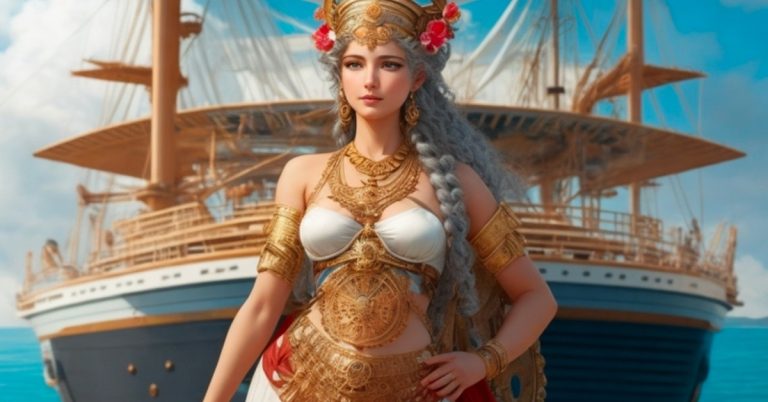
In the spring of 204 BC, with Hannibal still loose in Italy, the Roman Senate sent a warship to Asia Minor to fetch a black stone.
They had consulted their oldest prophecies and the answer was plain. Rome could win the war if it brought the Mother home. The stone came back up the Tiber, the war turned, and the city built her a temple on the Palatine.
That is how a goddess from the mountains of Phrygia became Rome’s Magna Mater, the Great Mother, worshiped with drums, lions, and a priesthood that shocked the Romans who imported her.
Overview of Cybele
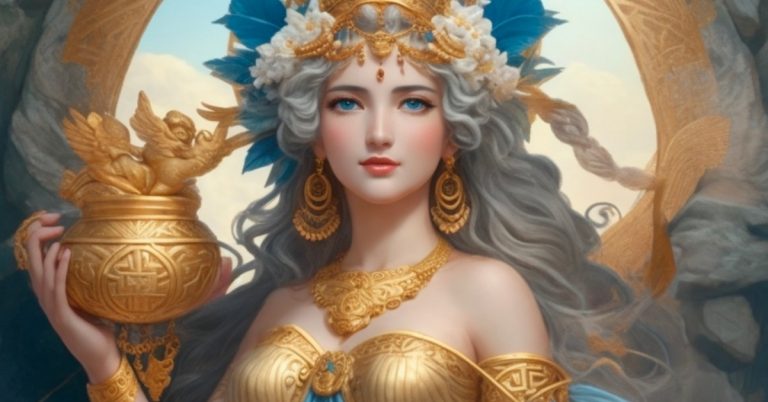
Cybele is the Great Mother of Anatolia, the goddess of mountains, wild animals, and the raw fertility of the earth. The Phrygians called her simply Matar, “Mother.” The Greeks met her in the colonies of Asia Minor and folded her into Rhea, mother of Zeus. The Romans brought her over by ship and gave her the title she is best known by, Magna Mater.
She belongs to the wild edges of the world. Her home is the mountain, her companions are lions, her music is the drum and the clashing cymbal, and her worship could tip into ecstasy. Her city crown says she guards civilization; her lions say she was here before it.
Her great Roman festival was the Megalesia in April, followed in later centuries by a spring cycle in March that mourned and then celebrated her consort Attis.
Titles
- Magna Mater (“Great Mother,” her Roman title)
- Mater Deum Magna Idaea (“Great Idaean Mother of the Gods,” her full state name in Rome)
- Matar Kubileya (“Mother of the Mountain,” in Phrygian)
- Meter Theon (“Mother of the Gods,” in Greek)
- Dindymene and Idaea (after her mountains, Dindymus and Ida)
- Agdistis (her name at Pessinus, tied to Mount Agdos)
- Berecyntia (after the Berecyntes, a Phrygian people)
Characteristics
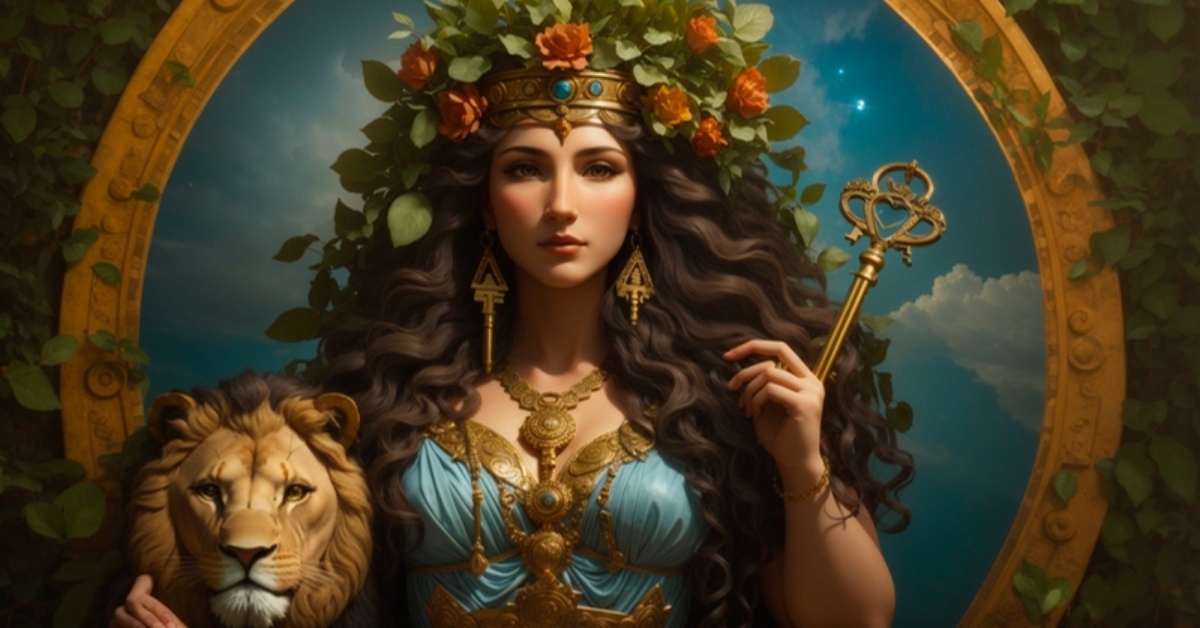
How Cybele tends to be shown in art:
- Seated on a throne, heavy robed and matronly
- Wearing a mural crown, a circlet shaped like city walls and towers
- Flanked by two lions, or with a lion lying in her lap
- Holding a tympanum, a large round frame drum, in one hand
- A libation bowl in the other
- Sometimes riding a chariot drawn by lions
Abilities
- Fertility of the earth — the wild growth of mountains, forests, and flocks
- Mistress of animals — lions obey her; leopards nursed her in one telling
- Protector of cities — the crown of towers marks her as guardian of walls
- Healing and purification — Diodorus credits her with rites that cured sick flocks and children
- Divine frenzy — her music could drive worshipers into ecstasy, and the frenzy itself was holy
Symbols
- The lion — her animal, sacred in Phrygia long before Greece or Rome
- The mural crown — towers and walls, the emblem of the protected city
- The tympanum and cymbals — the drum and clash of her rites
- The pine tree — the tree Attis died beneath, carried in procession each March
- The black stone — the aniconic form she took at Pessinus and later in Rome
- The mountain — her oldest home and her oldest name
Traits
- Maternal on a vast scale, mother of gods, cities, and wild things alike
- Possessive and terrible in love, as Attis learned
- Untamed, most at home on a mountainside
- A bringer of madness who could also lift it
- Foreign and ancient, and the Romans never forgot either
Festivals and Rituals
The Megalesia ran from April 4 to April 10 in Rome and marked the anniversary of her arrival. It opened with a procession in which her image was carried through the streets while the galli, her priests, danced to pipes and drums and collected offerings from the crowd. Then came the games: plays staged in her honor (several of Terence’s comedies premiered there) and chariot races in the Circus Maximus. Roman nobles held rounds of lavish dinner parties for one another in the same week. The Senate eventually had to cap the spending.
The March cycle grew later and centered on Attis. By the fourth century AD the calendar ran like this: March 15, the Canna intrat, when reed-bearers carried reeds in procession; March 22, the Arbor intrat, when a felled pine wrapped in wool and hung with violets was borne to her temple like a body on a bier; March 24, the Dies Sanguinis, the Day of Blood; March 25, the Hilaria, a day of open rejoicing; March 26, a day of rest; and March 27, the Lavatio, when her image was carried to the river Almo and washed.
The galli were her priesthood. They castrated themselves in her service, in imitation of Attis, and lived as a class apart: long bleached hair, bright robes, jewelry, heavy makeup, and a reputation for begging processions and fortune-telling. Roman law forbade any citizen from joining them for the first two centuries of the cult, so the temple on the Palatine was staffed by foreigners and slaves. Later, Claudius created the office of archigallus, a head priest who was a Roman citizen and stayed intact.
The taurobolium came latest of all, in the second century AD. A bull was sacrificed above a pit; a Christian poet, writing much later and with an axe to grind, describes the priest below drenched in its blood. Earlier inscriptions suggest something less theatrical. Either way, by then it was a rite of the Great Mother.
Legends associated with Cybele
Cybele’s stories come from three peoples who each told her differently: Phrygians who worshiped her, Greeks who explained her, and Romans who needed her. The threads that run through all three are a mountain, a beloved young man, and a stone that traveled.
The girl the leopards raised
The historian Diodorus Siculus preserves a telling in which Cybele begins as a mortal princess.
Meion, king of Phrygia and Lydia, married Dindyme and got a daughter he did not want. He had the baby exposed on a mountain called Cybelus. The mountain kept her alive. Leopards came down and nursed her, and other beasts of the mountain took their turn, until shepherd women found the child and raised her. They named her for the mountain.
She grew up strange and gifted. Diodorus says she was the first to devise the pipe of many reeds, and to invent cymbals and kettledrums. She taught rites that healed sick flocks and sick children. The Phrygians loved her, and they called her the Mother of the Mountain.
Then she fell in love with a local youth named Attis. When her parents discovered she was pregnant, her father had Attis killed, along with the nurses who had raised her. Cybele lost her mind. She fled the palace and wandered the countryside with her hair loose, beating a drum. Plague and famine followed her across Phrygia. The oracle told the people the cure: bury Attis with honor, and worship Cybele as a goddess. They did, and built her a temple at Pessinus.
Diodorus wrote this way about many gods, treating them as great mortals whose fame outgrew them. The drum, the frenzy, and the beloved dead youth are all there anyway. He simply put them in a human body first.
Agdistis and the almond tree
The version told at Pessinus itself, preserved by Pausanias and later by Arnobius, is the strangest and the oldest in feel.
Zeus, sleeping on the ground, spilled his seed on the earth. From it grew Agdistis, a being with both male and female sex, wild and uncontrollable. The gods feared it. They tricked it (Dionysus, in some tellings, laced its spring with wine) and cut away the male organ while it slept. Where the blood fell, an almond tree grew.
The daughter of the river Sangarius, a nymph named Nana, picked an almond from that tree and tucked it into her lap. The fruit vanished and she was pregnant. Her father shut her away to starve, but the Mother fed her, and the child was born: Attis. He was exposed too, and a he-goat tended him.
He grew up beautiful. Agdistis, now the female Mother herself, loved him. But the king of Pessinus arranged for Attis to marry his daughter, and in the middle of the wedding song Agdistis appeared. Madness took the whole hall. Attis ran to a pine tree and castrated himself beneath it; the bride’s father did the same. Attis bled to death, and where his blood soaked the ground, violets bloomed.
Agdistis repented. She begged Zeus to restore him. Zeus offered a compromise: the body of Attis would never decay, that his hair would keep growing, and that his little finger would keep moving. That was the compromise the cult lived with. Attis was dead and also, in some way that mattered, still alive.
Ovid tells it more simply. Attis was a Phrygian boy so lovely that the goddess bound him to her temple and made him swear to stay a boy forever. He broke the vow with the nymph Sagaritis. Cybele struck the tree that held the nymph’s life, and the nymph died with it. Attis, thinking the temple roof was falling on him, tore at his body with a sharp stone and cut away what he called the cause of his sin. “His madness set a precedent,” Ovid writes, and her servants have followed it ever since. A different, plainer tradition made Attis a Lydian hunter killed by a boar, the way Adonis died. Every version agrees on the ending: the pine, the blood, the flowers, and a goddess who could not undo her own grief.
The Day of Blood and the Hilaria
The Romans turned that story into a week of ritual, and it set the rhythm of their March.
On March 22 a pine was cut in the woods and carried into her temple by a guild called the tree-bearers. It was bound in wool and hung with violets, because violets were Attis’s blood, and an image of the young god was fixed to the trunk. For two days the city mourned over it. Worshipers fasted, and the drums and pipes of the goddess played a lament.
March 24 was the Day of Blood. The galli whirled to the music until they bled, cutting their arms and lashing themselves, and the blood was offered to the tree. This was also the day, by tradition, on which a new gallus made the cut that Attis had made, and became a priest. Rome watched, appalled, and came back every year. Roman citizens were forbidden to do it at all.
Then on March 25 came the Hilaria, and the mood flipped. The mourning ended. Attis, the fasting, and the grief were declared over, and the city gave itself up to a day of feasting, masquerades, and jokes. Two days later the goddess’s image went down to the river Almo to be washed, and the cycle was done.
Mourning, blood, and joy, in that order. The pattern is the pattern of the year, and worshipers knew it. Winter kills the green; something in the earth refuses to stay dead.
Her lions, her crown, her drums
The Romans liked to explain why she looked the way she did, and Ovid gives all three answers.
The lions were once people. Hippomenes won the runner Atalanta by dropping three golden apples in her path, and forgot to thank the goddess who gave them to him. Passing a shrine of the Mother of the Gods deep in the woods, he pulled his new wife inside and profaned it. Cybele spared their lives and took their shapes. She made them tawny and maned, curved their fingers into claws, and hitched them to her chariot, where, in Ovid’s line, they tamely bite on Cybele’s bit.
The crown of towers is because she gave the first cities their walls. The Great Mother of mountains is also the Great Mother of the places people built to be safe from mountains.
The drums and cymbals are borrowed from Rhea. When Rhea hid the baby Zeus on Mount Ida from his child-eating father, the Curetes danced and clashed their weapons so his crying could not be heard. The noise of Cybele’s rites, Ovid says, is the same noise, still covering for a god.
The stone that came to Rome
This is the story the Romans told best, because it happened to them.
In 204 BC the Second Punic War was in its fifteenth year and Hannibal was still on Italian soil. It had been a year of showers of stones, which Romans took as a warning from the sky, and the Senate ordered the Sibylline Books opened. The books said that a foreign enemy in Italy could be driven out if the Idaean Mother were brought from Pessinus to Rome. The oracle at Delphi confirmed it, and added one condition: the goddess must be received by the best man in Rome.
An embassy of five ships went east to King Attalus of Pergamon, who held sway over Pessinus. Ovid says Attalus balked at giving up the goddess until the earth shook and the Mother spoke from her own shrine: let me go, Rome is where I belong. Attalus escorted the Romans to Pessinus and handed over the sacred stone, a small black object the locals said had fallen from the sky and was the Mother of the Gods herself.
Back in Rome, the Senate had to pick the best man in the city. They chose Publius Cornelius Scipio Nasica, a cousin of the great Scipio and still too young to hold office. He went down to Ostia with the leading matrons of Rome to meet the ship.
Then the ship stuck. Ovid says it lodged in the Tiber shallows like an island in mid-ocean, and no crew could move it. Among the matrons was Claudia Quinta, a noblewoman with a bad reputation: she dressed too well, she talked back, and the city had decided she was unchaste. She stepped to the water, scooped it over her head three times, and prayed aloud. If she was guilty, let the goddess condemn her. If she was innocent, let the goddess prove it and follow her chaste hands. Then she took hold of the rope and gave it a slight pull.
The ship followed her. The matrons passed the stone hand to hand up the river to the Palatine, where it was housed in the temple of Victory until its own temple was finished. That was April of 204 BC. Within the year the harvest came in rich, and within two Hannibal had sailed for Africa. The Romans drew the obvious conclusion. Her temple on the Palatine was dedicated in 191 BC, the games called the Megalesia were founded, and Claudia Quinta’s statue stood in the vestibule for centuries. When the temple burned, twice, the statue was said to have come through untouched.
An older Cybele?
Every Roman knew the goddess on the Palatine had been born somewhere else. How far back “somewhere else” goes is the part it has taken modern archaeology to measure.
The Phrygians of the eighth and seventh centuries BC left her name cut into rock. On a rock-cut shrine in the Phrygian highlands, dated to the first half of the sixth century BC, an inscription reads Matar Kubileya, and most scholars read the second word as a Phrygian adjective meaning “of the mountain.” Mother of the Mountain. That word, Kubileya, is where the Greek Kybele comes from. It began as a description of where she lived. The monuments themselves are just as telling. Across the Phrygian uplands, at Midas City and elsewhere, the Phrygians carved enormous doorway-shaped facades straight into cliff faces, with a niche at the center where the Mother stood or was imagined to stand. The mountain was her temple. Her image on those facades already shows the lions, plus a bird of prey and a small vessel for offerings. At Pessinus, her most famous sanctuary, she took the form of a black stone, and she stayed one all the way to Rome.
Behind the Phrygians stands a still older goddess whose relationship to Cybele is argued over. Kubaba was the city goddess of Carchemish on the Euphrates, worshiped by Hittites, Hurrians, and Luwians across the second and first millennia BC. She sits on a throne with a pomegranate and a mirror, in a high crown and veil, sometimes with lions. In 1960 the scholar Emmanuel Laroche proposed that Kubaba and Cybele were the same goddess, and the closeness of the names has kept the idea alive. Lynn Roller, whose study of the Phrygian Mother is the standard one, and more recent writers such as Ian Rutherford push back: Kubaba was never called a mother, her character was civic, and the names may only look alike. Perhaps the Phrygians borrowed her throne and her lions and nothing more. Perhaps the two goddesses grew up side by side in the same Anatolian soil.
Every side of that argument agrees on this much: by the time a Greek first wrote her name down, Cybele had already been the Mother of the Mountain for centuries, worshiped in cliff faces and in a black stone. The Romans imported a goddess who was ancient when they met her, and they said so.
Cybele across cultures
The Great Mother of Anatolia had a way of absorbing her neighbors, and of being absorbed.
Her nearest kin is the earth itself. In the Pessinus story Attis is born from Zeus’s seed spilled on the ground, which is the same move Greek myth makes with Gaia: the earth as a mother on her own authority. The Greeks paired Cybele with Rhea, the Titan mother of the Olympians, so closely that Roman poets use the two names for one goddess and set her rites on Rhea’s Mount Ida.
West of Phrygia, on the Aegean coast at Ephesus, stood another Anatolian mother whom the Greeks called Artemis. The Ephesian Artemis has little to do with the virgin huntress of the mainland. She is a mistress of animals with a many-breasted torso and lions on her arms, and most historians trace her un-Greek features to the same Anatolian mother tradition that produced Cybele. Two cities, one older goddess.
As Rome’s empire spread, so did the Mother’s temples, and in Egypt and along the Levant her worshipers identified her with Isis, another mother of a dying-and-returning god. The pattern of a beloved young consort who dies with the year and is mourned by a goddess links Cybele and Attis to Isis and Osiris, to Aphrodite and Adonis, and to Inanna and Dumuzi in Mesopotamia. Each culture wrote its own grief into the turning of spring.
One modern reading belongs here. In The Great Cosmic Mother, Monica Sjöö and Barbara Mor group Cybele with Hecate and Kali as goddesses of the dark moon, the source of vision and also of madness, and they argue that love goddesses like her were once also goddesses of war, death, and wildness before later cultures split those roles apart. It is an interpretation, one of many, but the Cybele of Pessinus, with her frenzy and her blood and her lions, fits it better than most.
Final thoughts
Rome was the most organized society of the ancient world, and it chose, in its worst hour, to bring in a goddess whose worship it could barely stand to look at.
That tension is the whole point of Cybele. She was the wild mountain and the walled city in one figure, the healer who could also drive you mad, the mother whose love killed the boy she loved. The Romans took her because she was old, powerful, and foreign, and then spent five centuries holding her at arm’s length while celebrating her every spring. Her stone sat on the Palatine until the last pagan temples closed.
The question she leaves behind is a fair one. When a culture calls something holy and also cannot bear it, which one of those is the truth about the thing?
Bibliography
- Livy. History of Rome, Book 29, chapters 10-14 (the Idaean Mother brought to Rome, 204 BC). Trans. Rev. Canon Roberts, via Wikisource.
- Ovid. Fasti, Book IV, April 4 (Attis, the galli, the lions and crown, Claudia Quinta). Trans. A. S. Kline, Poetry in Translation.
- Ovid. Metamorphoses, Book X (Atalanta and Hippomenes turned to lions). Trans. A. S. Kline, Poetry in Translation.
- Diodorus Siculus. Library of History, Book III, 58-59 (Cybele’s birth and Attis). Loeb translation, via LacusCurtius.
- Pausanias. Description of Greece, 7.17.9-12 (Agdistis and Attis at Pessinus). Trans. W. H. S. Jones, via Perseus.
- Roller, Lynn E. In Search of God the Mother: The Cult of Anatolian Cybele. University of California Press, 1999.
- Lendering, Jona. “Cybele”. Livius.org.
- Wasson, Donald L. “Cybele”. World History Encyclopedia.
- Atsma, Aaron J. “Kybele”. Theoi Greek Mythology.
- Sjöö, Monica, and Barbara Mor. The Great Cosmic Mother. HarperOne.
- “Cybele”, “Attis”, “Galli”, “Claudia Quinta”, and “Taurobolium”. Wikipedia.
- “Kubaba (goddess)”. Wikipedia.