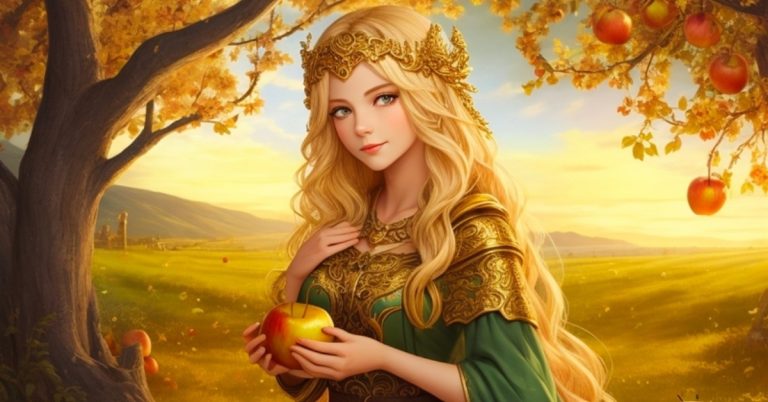
Athena: Goddess of Wisdom, Craft, and Warfare
She was born fully grown, in full armor, screaming a war cry, straight out of her father’s skull.
That’s how Athena enters the world, and it tells you everything. No childhood, no easing in. The goddess of wisdom and war arrives ready for both.
She’s the clear-eyed strategist of the Greek pantheon, the one heroes prayed to before a hard decision. Patron of Athens, master of the loom, protector of the clever. Here’s the goddess behind the owl and the olive branch.
Overview of Athena
Athena, also called Pallas Athena, is one of the twelve Olympians and a daughter of Zeus, king of the gods. Her home is Greece, and one city above all: Athens, which took her name and built the Parthenon in her honor on the Acropolis.
She rules a wide territory for a single goddess. Wisdom and good counsel. Strategy in war. The crafts of the loom and the workshop. The slow business of building a civilization that lasts.
Her name is older than the Greek language. It appears in the Bronze Age Linear B tablets, and most scholars think the goddess was named after the city rather than the other way around. The ancient Greeks, Plato included, tried to invent meanings for it and never quite agreed.
Her great festival was the Panathenaia, held every year in Athens.
Titles
- Pallas Athena
- Athena Parthenos (“the Virgin”)
- Promachos (“who fights in front”)
- Ergane (“the worker,” patron of craftspeople)
- Glaukopis (“bright-eyed” or “owl-eyed”)
Characteristics
How Athena tends to be shown in art:
- Tall and commanding, with a calm, level gaze
- Clad in armor, often with a crested helmet pushed back
- Gray eyes, the source of her epithet “bright-eyed”
- Carrying a spear and a shield
- Wearing the aegis, a goatskin cloak fringed with snakes and set with a Gorgon’s head
- Almost always accompanied by her owl
Abilities
- Strategic warfare — she wins by planning, not rage, the opposite of Ares
- Wisdom and counsel — the patron of clear, reasoned thought
- Craft and weaving — unmatched at the loom and in the workshop
- Heroic patronage — the guiding hand behind Odysseus, Perseus, and Heracles
- Invention — credited with the bridle, the plow, the ship, and the olive tree
Symbols
- The owl — her bird, a sign of wisdom and watchfulness
- The olive tree — her gift to Athens, standing for peace and plenty
- The aegis — her snake-fringed cloak bearing the Gorgon’s head
- The spear and shield — her warrior’s gear
- The Gorgoneion — the severed head of Medusa, worn as protection
Traits
- Rational and measured, choosing thought over impulse
- Fiercely just, but capable of harsh punishment when crossed
- Disciplined and self-possessed
- Loyal to the mortals and heroes who earn her favor
- Proud of her skill, and unforgiving of anyone who claims to rival it
Festivals and Rituals
The heart of Athena’s worship was the Panathenaia, held in Athens each year and on a grander scale every fourth year.
It packed the calendar with athletic games, music, poetry, and a great procession up to the Acropolis. The festival celebrated both halves of her nature, the physical and the intellectual, and renewed the city’s bond with its patron.
Above it all stood the Parthenon, the temple built for Athena Parthenos, which still crowns the Acropolis today. Rituals there retold the story of how she won the city in the first place.
Legends associated with Athena
Athena’s myths circle the same themes again and again: cleverness over brute force, the price of pride, and a goddess who picks her favorites and stands by them.
The motherless birth
Athena’s story starts before she’s even born, with a prophecy and a nervous king.
Zeus took the wise Titaness Metis as his first love. When she became pregnant, an oracle warned him that her child might one day overthrow him, just as he had overthrown his own father. So Zeus did the most Zeus thing imaginable. He swallowed Metis whole.
What he didn’t reckon with was the daughter already growing inside her.
Time passed, and Zeus was struck by a monstrous headache, a splitting, unbearable pain. In desperation he had his skull cracked open. Out leapt Athena, full-grown and armored, with a war cry that shook Olympus.
Accounts differ on who swung the axe. Most name Hephaestus, the smith god. A few say it was Prometheus. Either way, Athena stepped into the world already wise, already armed, and already her father’s favorite.
The contest for Athens
A city without a patron god was a city up for grabs, and two powerful Olympians both wanted Athens.
Poseidon, god of the sea, struck the rock of the Acropolis with his trident. Water gushed up. It was a dramatic gift, but the spring ran salt, useless for drinking or growing.
Then Athena stepped forward and planted a single olive tree.
It was the quieter offering, and the wiser one. The olive gave food, oil, wood, and shade, year after year. The Athenians chose her, and the city carried her name from then on. Poseidon, sore loser that he was, is said to have flooded the plain in spite.
Arachne and the weaving contest
Here’s the story that shows Athena’s harder edge.
Arachne was a mortal girl from Lydia, a weaver so gifted that people said she must have learned from Athena herself. Arachne didn’t care for the compliment. She’d learned from no one, she boasted, and she’d beat the goddess in a fair contest any day.
Athena gave her the chance.
The two set up their looms. Athena wove a tapestry glorifying the gods in their majesty. Arachne wove hers to show the gods at their worst, every lie and betrayal and abuse of power, and she wove it flawlessly. Athena searched the work for a single mistake and found none.
That was the problem. The girl was right, and just as good.
Enraged, the goddess struck her with the weaving shuttle. Humiliated, Arachne hanged herself. Athena, in a gesture that’s either mercy or final punishment depending on how you read it, transformed her into a spider, so she and all her children could go on spinning forever.
This one comes to us mainly from the Roman poet Ovid, in his Metamorphoses, where the goddess goes by her Roman name, Minerva. It’s a cautionary tale about pride, though it’s worth noticing that Arachne’s only real crime was being too good.
The golden apple and the fall of Troy
Athena’s pride had consequences on a far bigger stage.
It began at a wedding. The goddess of discord, Eris, wasn’t invited, so she tossed a golden apple into the feast inscribed “to the fairest.” Three goddesses claimed it at once: Hera, Aphrodite, and Athena.
To settle it, they took the question to a Trojan prince named Paris. Each goddess tried to bribe him. Hera offered power. Athena offered wisdom and victory in every battle. Aphrodite offered the most beautiful woman in the world.
Paris chose Aphrodite. The woman was Helen, already married to a Greek king, and the theft of her lit the ten-year Trojan War.
Athena never forgave the slight. Through the whole war she threw her weight behind the Greeks, and she became the steady guiding hand behind Odysseus, the cleverest of them all, shepherding him home through ten more years of wandering. The goddess who lost a beauty contest helped burn a city for it.
The raising of Erichthonius
Not all of Athena’s stories are sharp. One shows her tender side.
When the smith god Hephaestus tried to force himself on her, Athena fought him off, and his seed fell instead on the earth, on Gaia. From that the earth bore a child, Erichthonius, part human and part serpent.
Athena could have turned away from him. Instead she took the strange infant in, hid him in a chest, and entrusted him to the daughters of the king of Athens. Erichthonius grew up to become a king himself, and a revered ancestor of the Athenian people, binding the goddess to her city by blood as well as by gift.
An older Athena?
There’s an older Athena underneath the one we know. The trail to her starts with the oldest Greek writing we have.
Her name turns up in the Bronze Age, centuries before the myths were written down. On a clay tablet from Knossos, in the script we call Linear B, a scribe recorded an offering to a-ta-na po-ti-ni-ja — “Mistress Athana,” or “the Lady of Athana.” That title, Potnia, “the Lady,” was the great name of the Aegean world, given to a powerful goddess who watched over the palace: she guarded the king and the citadel, and she presided over the household crafts, the spinning and weaving and skilled handwork. Long before she was the warrior of Athens, Athena seems to have been a palace-and-household goddess of Minoan Crete and Mycenaean Greece.
Look at what she still carries, and that older goddess keeps showing through. Minoan shrines have given us famous figurines of a goddess with snakes winding up both arms, and many scholars read Athena’s serpents — the snakes that fringe her aegis, the serpent-child Erichthonius she takes in — as that same sacred household snake, the one believed to guard the home, carried down the centuries. Her owl points the same way. These guardian goddesses were imagined appearing as birds, and some have argued Athena was once a bird herself, the owl the last trace of an older shape. Even her epithet glaukopis, “owl-eyed,” may be a fossil of it.
None of this unmakes the Athena of the poets. The motherless birth, the contest for the city, the loom and the spear are her story too. But under the Olympian armor there seems to be someone much older: a Bronze Age guardian of the house and the citadel, keeper of the snake and the bird, whose crafts and whose creatures she never set down. It makes you look at that owl a little differently.
Athena across cultures
The thing Athena stands for, wisdom, keeps reappearing under other names.
The Hindu goddess Saraswati governs knowledge, music, and the arts, much as Athena governs wisdom and craft. And the Roman Minerva is so close a match that the Romans simply treated the two as the same goddess. When a figure shows up this consistently across cultures, it says something about what people everywhere have valued.
It isn’t only the goddess who travels. Her two oldest companions, the bird and the snake, turn up together all across the world, and almost always with the same charge: the bird for the sky, the snake for the earth and the waters below. Mesoamerica fused the pair into a single being — the feathered serpent the Aztecs called Quetzalcoatl and the Maya knew as Kukulkan, a god who was both at once and could pass between the worlds. Around the Great Lakes, the Anishinaabe tell of the Thunderbird of the upper air and the horned water-serpent of the deep, two powers kept in balance rather than one beating the other. None of these is Athena, and none borrowed from the rest. But the same instinct keeps surfacing — sky above, serpent below, and wisdom in whoever can hold both. Owl on her shoulder and snakes at her hem, Athena is the Greek answer to a very old question.
Final thoughts
Athena endures because she’s the patron of the part of us that thinks before it strikes.
She’s wisdom with armor on, proof that cleverness is its own kind of strength. She rewards the people who use their heads, she does not suffer arrogance, and more than two thousand years on, her owl still shows up wherever knowledge is prized. Not bad for a goddess who arrived yelling.
Bibliography
- Atsma, Aaron J. “Athena”. Theoi Greek Mythology.
- Cartwright, Mark. “Athena”. World History Encyclopedia.
- Kapach, Avi. “Athena”. Mythopedia.
- Ovid. Metamorphoses, Book VI (Arachne). Trans. via Theoi.
- Nilsson, Martin P. The Minoan-Mycenaean Religion and Its Survival in Greek Religion. Biblo & Tannen.
- Sjöö, Monica, and Barbara Mor. The Great Cosmic Mother. HarperOne.
- “Athena” and “Judgement of Paris”. Wikipedia.
- “Feathered Serpent” and “Thunderbird (mythology)”. Wikipedia.
- “Athena”. New World Encyclopedia.